MPPT Solar Charge Controller Supplier for 12V–48V Off-Grid Systems
Select a documented MPPT solar charge controller for 12V/24V or 12V–48V battery platforms, with model-specific PV limits, battery settings, Modbus communication and project configuration support.
Compare the Documented MPPT Controller Options
Review model-specific electrical limits and physical dimensions to ensure compatibility with your system design.
| Model | Battery platform | Charge current | Maximum PV power | Maximum PV Voc | MPPT tracking | Communication | Dimensions |
|---|---|---|---|---|---|---|---|
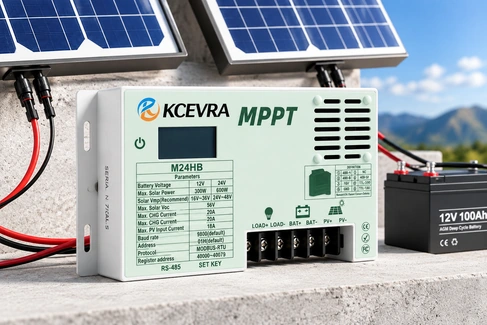
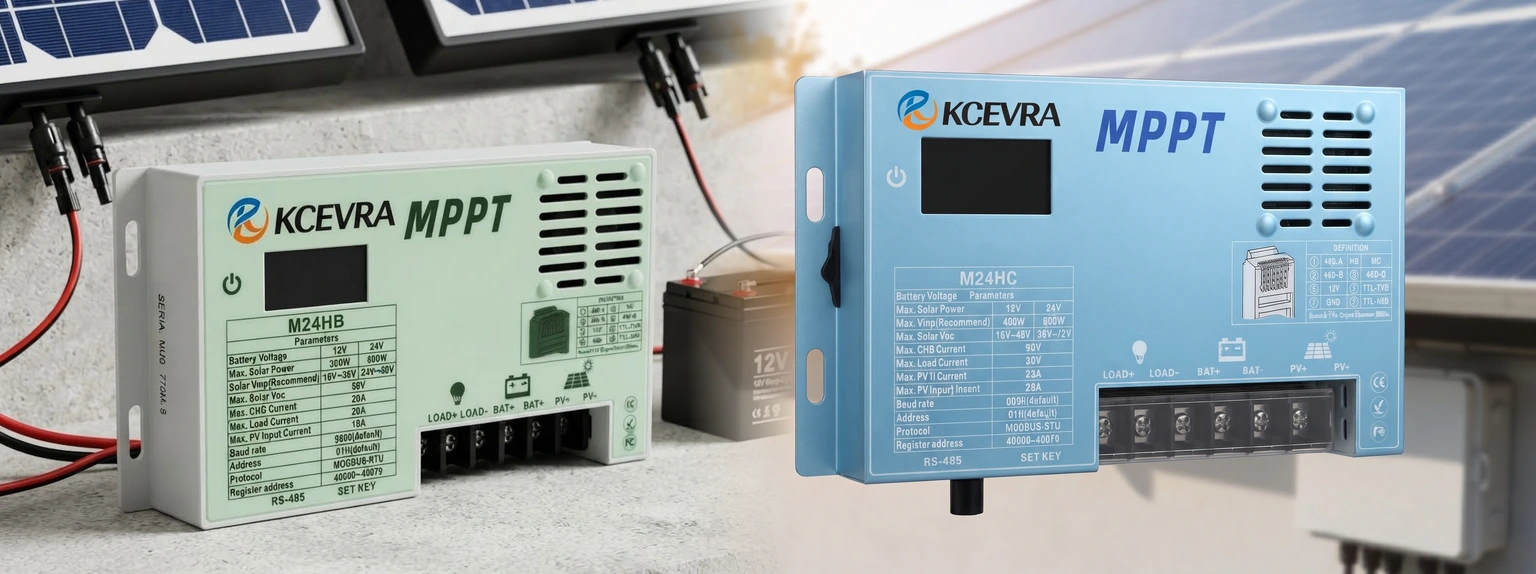
| M24HB | 12V/24V | 20A | 300W at 12V; 600W at 24V | 56V | Manual-stated maximum above 99.9% | RS485/TTL, Modbus; Bluetooth/Ethernet optional | 94.5 × 170 × 34 mm |
| M24HC | 12V/24V | 30A | 420W at 12V; 820W at 24V | 90V | Manual-stated maximum above 99% | RS485/TTL, Modbus; Bluetooth/Ethernet/4G/Wi-Fi according to configuration | 109 × 190 × 40 mm |
| M48HC | 12V/24V/36V/48V | 30A | 420W / 820W / 1080W / 1440W according to battery voltage | 60V at 12V; 90V at 24V/36V/48V | Manual-stated maximum above 99.9% | RS485/TTL, Modbus; optional communication modules according to configuration | 109 × 190 × 40 mm |
Note: Values are model-specific and should be confirmed against the latest approved manual and project configuration before ordering. Efficiency figures are manual-stated maximum values and must not be presented as guaranteed field performance without test conditions.
Where supported by the relevant manual, configurations may feature:
- Lithium, LiFePO4, lead-acid, gel and custom battery settings;
- Over-voltage, over-current, overload, over-temperature and short-circuit protection;
- Model-specific load output and temperature-management functions;
- Operating range around -35°C to 65°C where confirmed by the relevant model manual;
- IP32 or other protection information only when tied to the exact model. (Note: IP32 does not provide outdoor waterproof protection.)
Download Product Specifications
Access detailed technical datasheets, installation guides, and complete parameter tables for our MPPT solar controllers.
M24HB Datasheet
Complete technical specifications, wiring diagrams, and dimensional drawings for the 12V/24V 20A MPPT controller.
Download ParametersM24HC Datasheet
In-depth parameter tables, communication protocols, and configuration options for the 12V/24V 30A MPPT controller.
Download ParametersM48HC Datasheet
Comprehensive system design limits and technical data for the multi-voltage 12V-48V 30A MPPT controller.
Download ParametersChoose the Controller Platform for Your System
Review our four primary configuration paths for solar surveillance, communications, and off-grid power projects.
12V/24V MPPT Controller Series — M24HB and M24HC
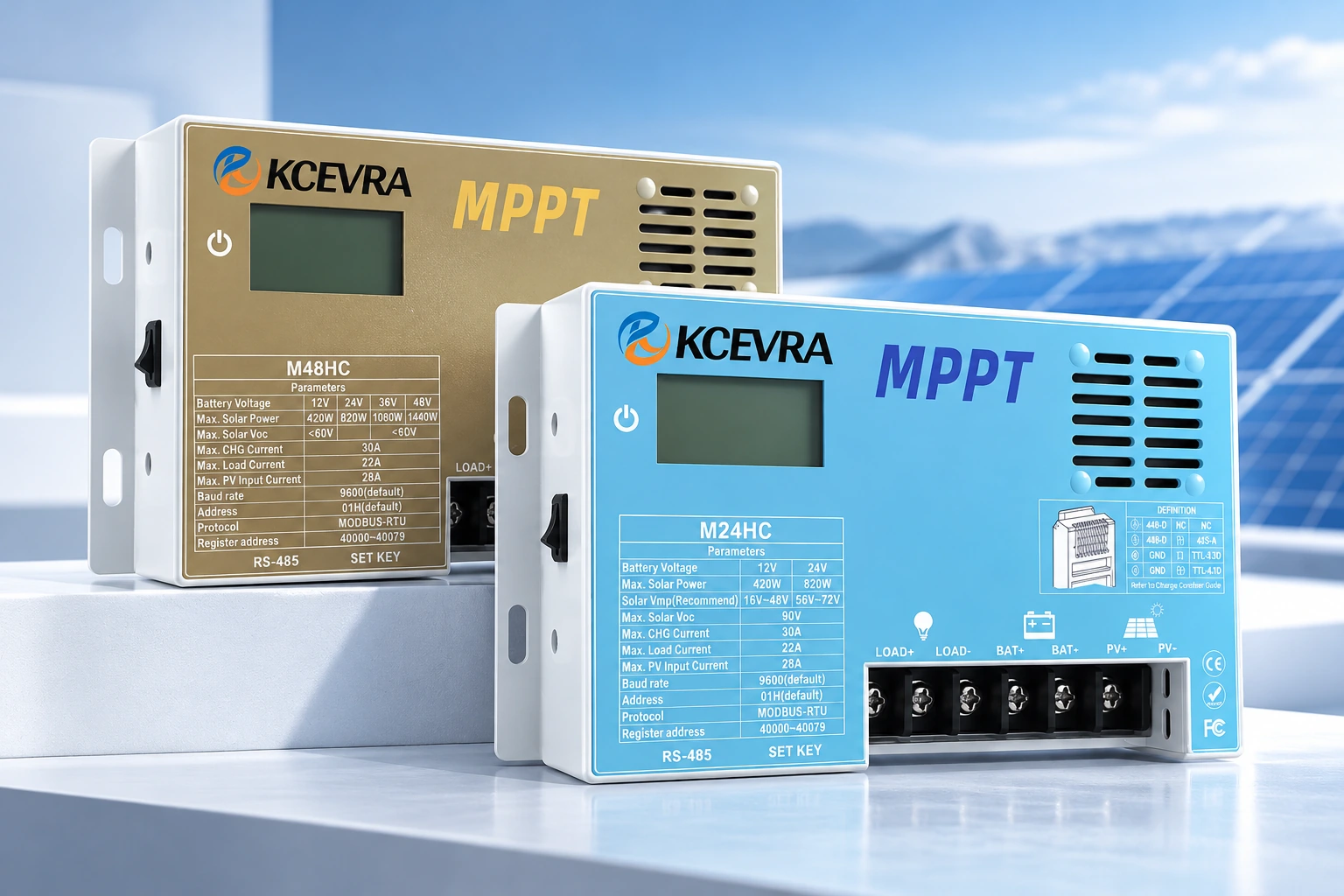
For compact and mid-range 12V/24V battery systems. Compare the M24HB and M24HC by charge current, PV input limit, battery platform, communication interface, load output and enclosure size.
- • M24HB: 20A, 12V/24V battery platform, up to 300W (12V) / 600W (24V), max PV Voc 56V.
- • M24HC: 30A, 12V/24V battery platform, up to 420W (12V) / 820W (24V), max PV Voc 90V.
- • Model-specific battery settings and communication options must be confirmed before ordering.
12V–48V Multi-Voltage MPPT Controller — M48HC
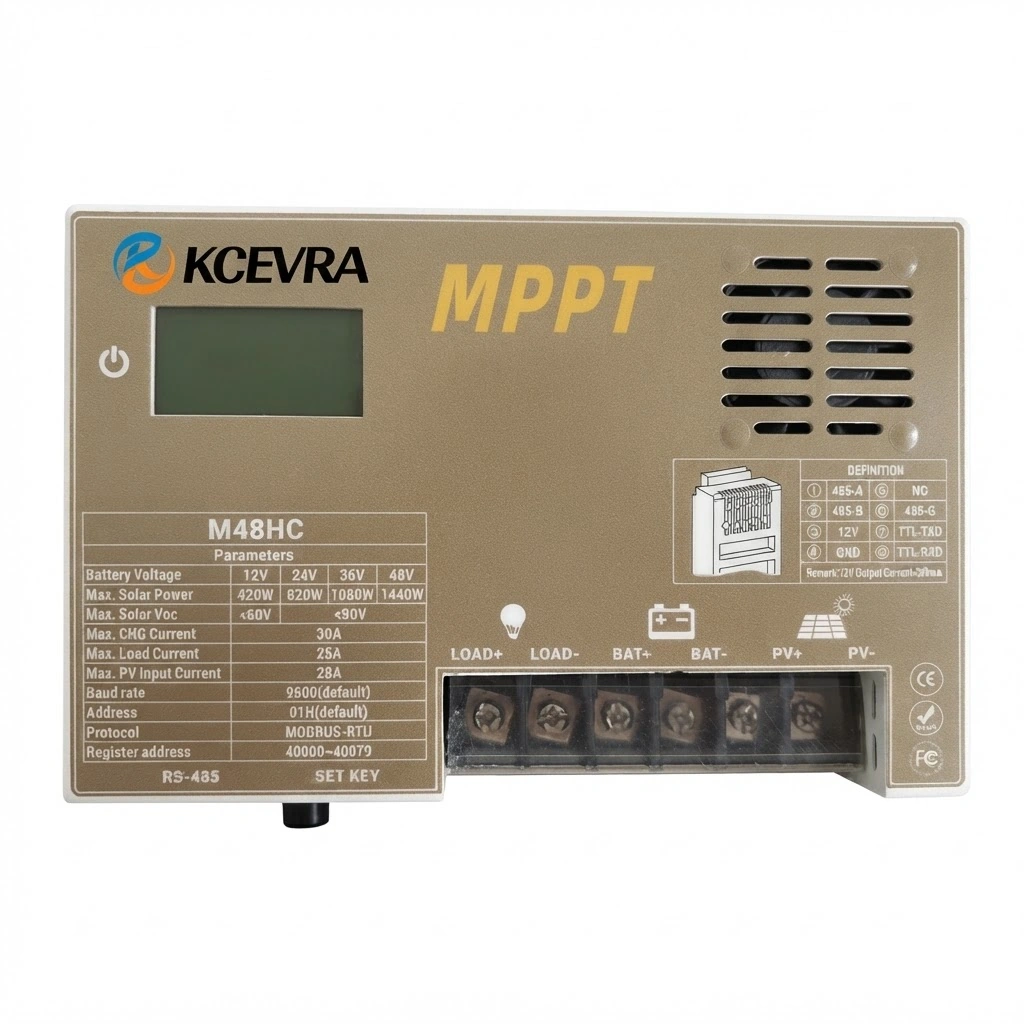
For projects that need one controller platform across 12V, 24V, 36V and 48V battery systems. Select the PV power and Voc range according to the battery voltage and solar-array design.
- • 30A charge controller.
- • Max PV power: 420W at 12V, 820W at 24V, 1080W at 36V and 1440W at 48V.
- • Max PV Voc: 60V at 12V and 90V at 24V, 36V and 48V.
- • RS485/TTL and Modbus communication. Optional connectivity depends on configuration.
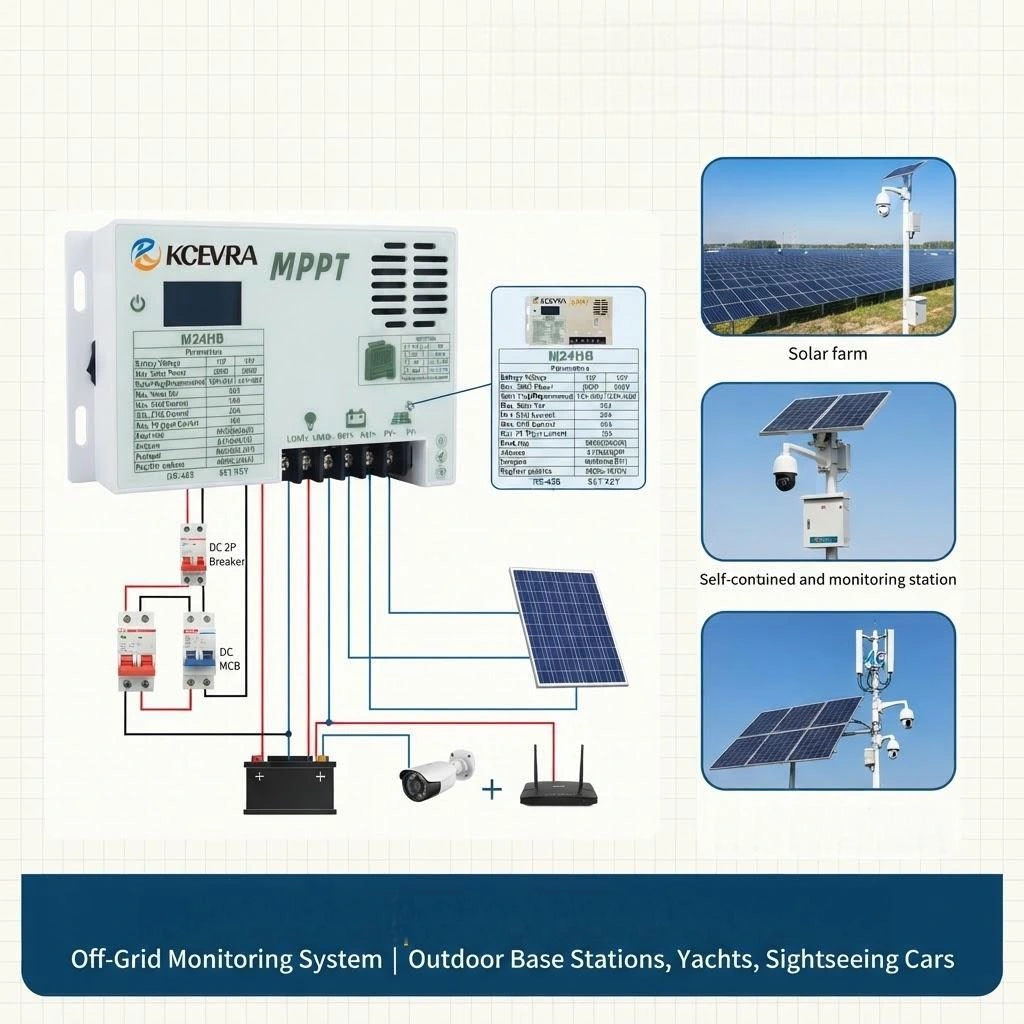
MPPT Configurations for Solar CCTV and Off-Grid Monitoring
Coordinate the controller with the solar array, battery, camera or network load, communication equipment and protected enclosure. Suitable for solar CCTV, remote monitoring, wireless bridge and industrial IoT power systems.
PV panel → MPPT controller → battery → DC/PoE load → remote monitoring or communication equipment
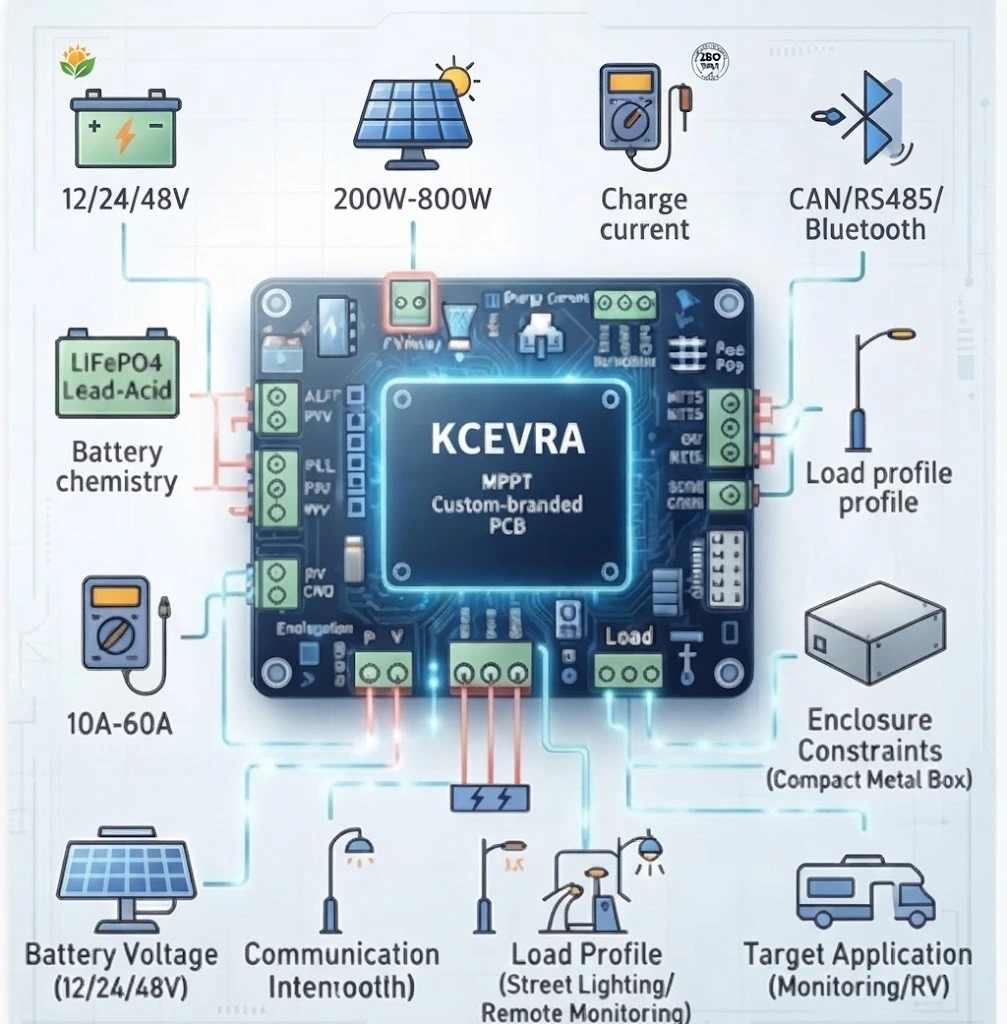
OEM/ODM MPPT Controller Project Support
Share the required battery voltage, PV array, charge current, communication interface, battery chemistry, load profile, enclosure constraints and target application. Use these inputs to evaluate the closest documented controller or a project-specific configuration.
Send Custom Controller Requirements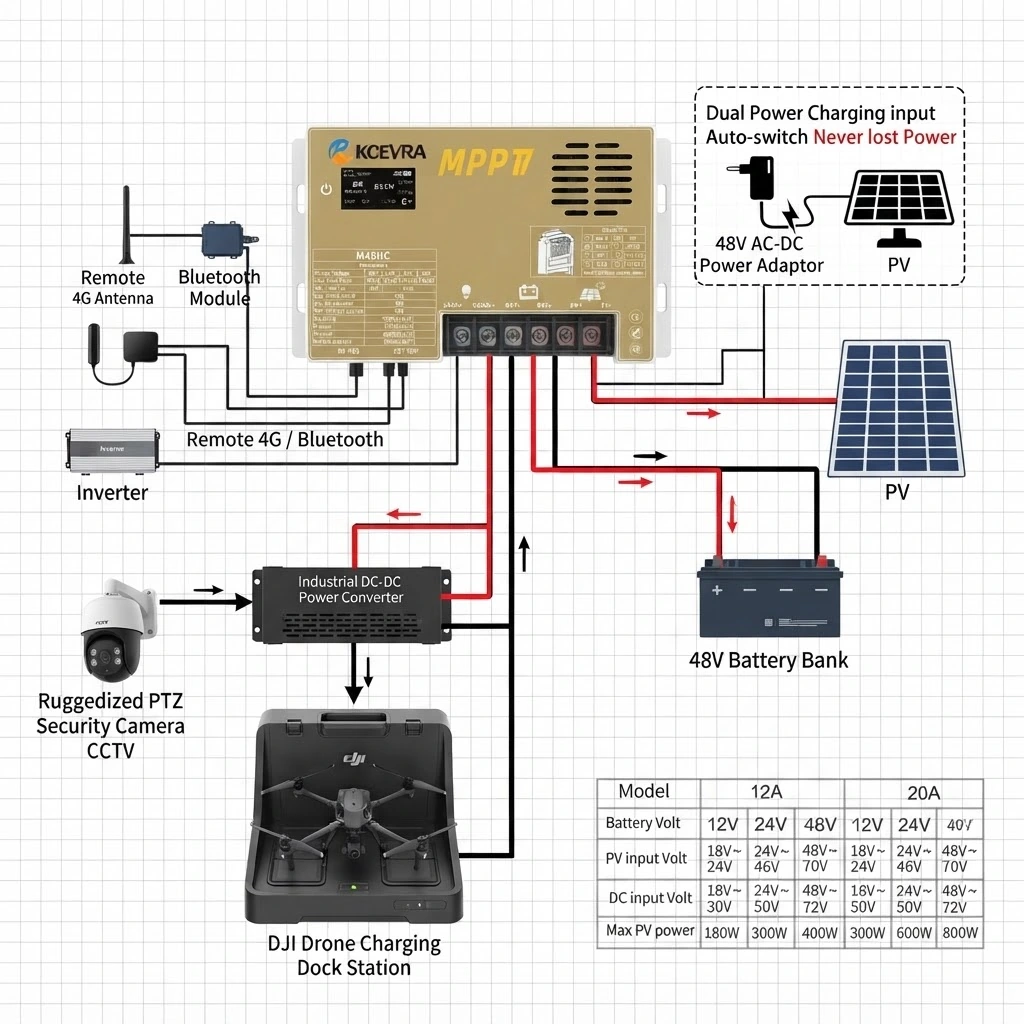
Match PV Input, Battery Platform and Load Before You Order
1. Battery voltage mismatch
A controller must be selected for the actual 12V, 24V, 36V or 48V battery platform required by your equipment.
2. PV voltage or power outside the controller limit
Both maximum PV Voc and maximum PV power must be checked. The cold-corrected string Voc must remain within the selected controller limit to prevent over-voltage damage.
3. Charge-current mismatch
The controller charge-current rating must match the calculated array power, battery voltage and the battery/BMS charging limit.
4. Communication and remote monitoring gaps
RS485/TTL and Modbus provide baseline connectivity. Bluetooth, Ethernet, 4G or Wi-Fi are available only where supported by the selected configuration.
5. Poor installation environment
The documented controller units require a protected, ventilated installation location. They are not bare outdoor waterproof controllers and must be housed in a proper enclosure.
How to Select an MPPT Solar Charge Controller
Follow these six steps to match the controller with your specific solar array, battery bank, and load requirements.
Confirm Battery Platform
Determine whether your system operates on a 12V, 24V, 36V, or 48V battery architecture.
Calculate Array Power
Determine the total PV array power and expected charging current to select the proper amperage rating.
Check Maximum PV Voc
Verify the controller’s maximum PV Voc limit, ensuring you account for cold-temperature voltage rise.
Compare Charging Limits
Compare the controller charge current with the battery specifications and the BMS charging limit.
Select Communication
Select the required communication interface (RS485, Modbus, etc.) and monitoring method for the project.
Confirm Installation
Confirm enclosure requirements, ventilation, fuse/breaker sizing, wiring gauges, and installation conditions.
Sizing Note: The required charging current is influenced by array power, battery charging voltage, conversion losses and the selected operating conditions. Use the controller’s model-specific limits rather than relying only on the amp label.
Battery Profiles and Communication Options
Match your energy storage chemistry and project monitoring requirements with supported configurations.
Battery Compatibility
- ✔ Chemistry Impact: Battery chemistry affects charging voltage, charging stages and protection settings.
- ✔ Lithium & LiFePO4: Configurations must follow the battery manufacturer’s voltage and BMS requirements.
- ✔ Lead-Acid & Gel: These batteries require their own specific multi-stage charging profile.
- ✔ Custom Settings: Custom battery settings require technical confirmation against the controller manual.
Data & Monitoring
- ✔ RS485/TTL & Modbus: Suitable for standard system communication where the selected model supports them.
- ✔ Wireless & Network: Bluetooth, Ethernet, 4G or Wi-Fi are optional configuration routes and must not be shown as universal standard features.
- ✔ Integration: Essential for remote IoT, CCTV, and environmental monitoring systems requiring uptime data.
Built Around Real Off-Grid Power Conditions
Designed to coordinate with solar arrays, batteries, and critical loads across various remote infrastructure projects.
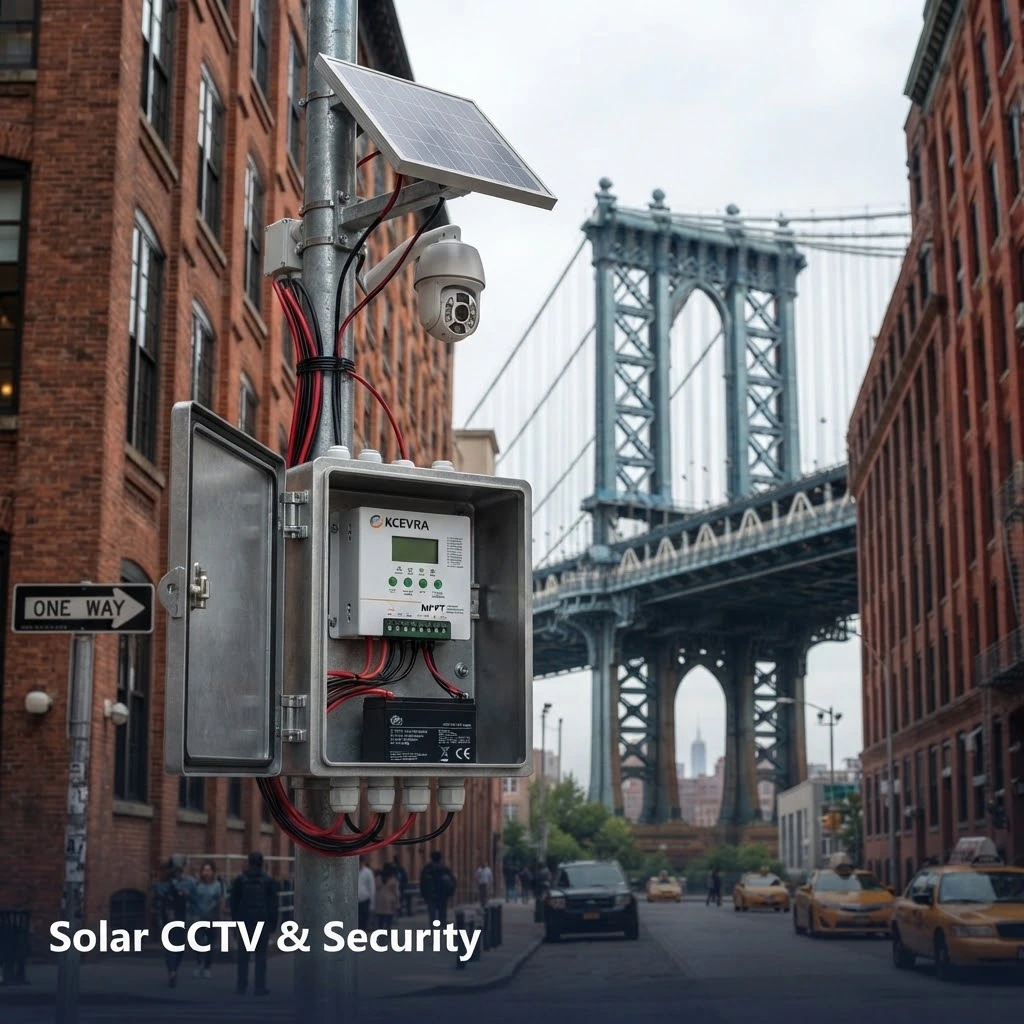
Solar CCTV & Security
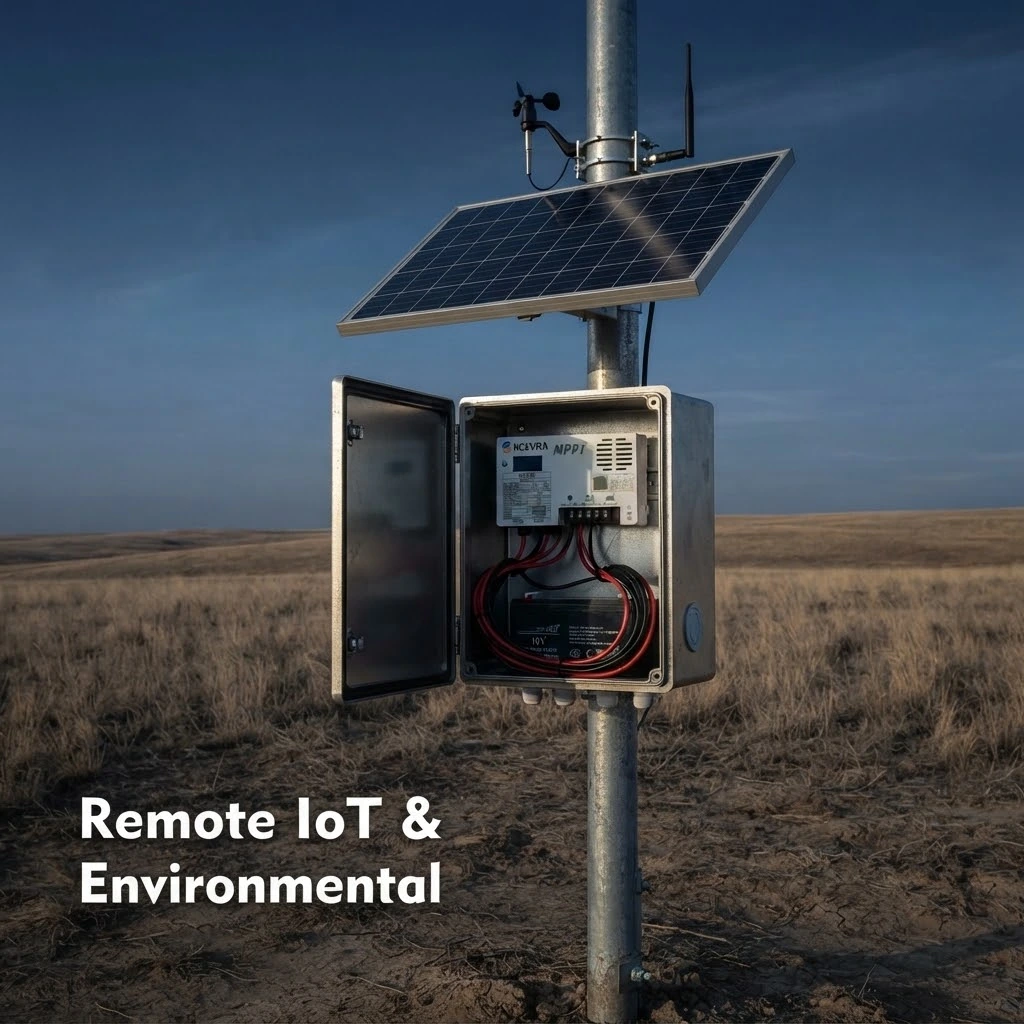
Remote IoT & Environmental
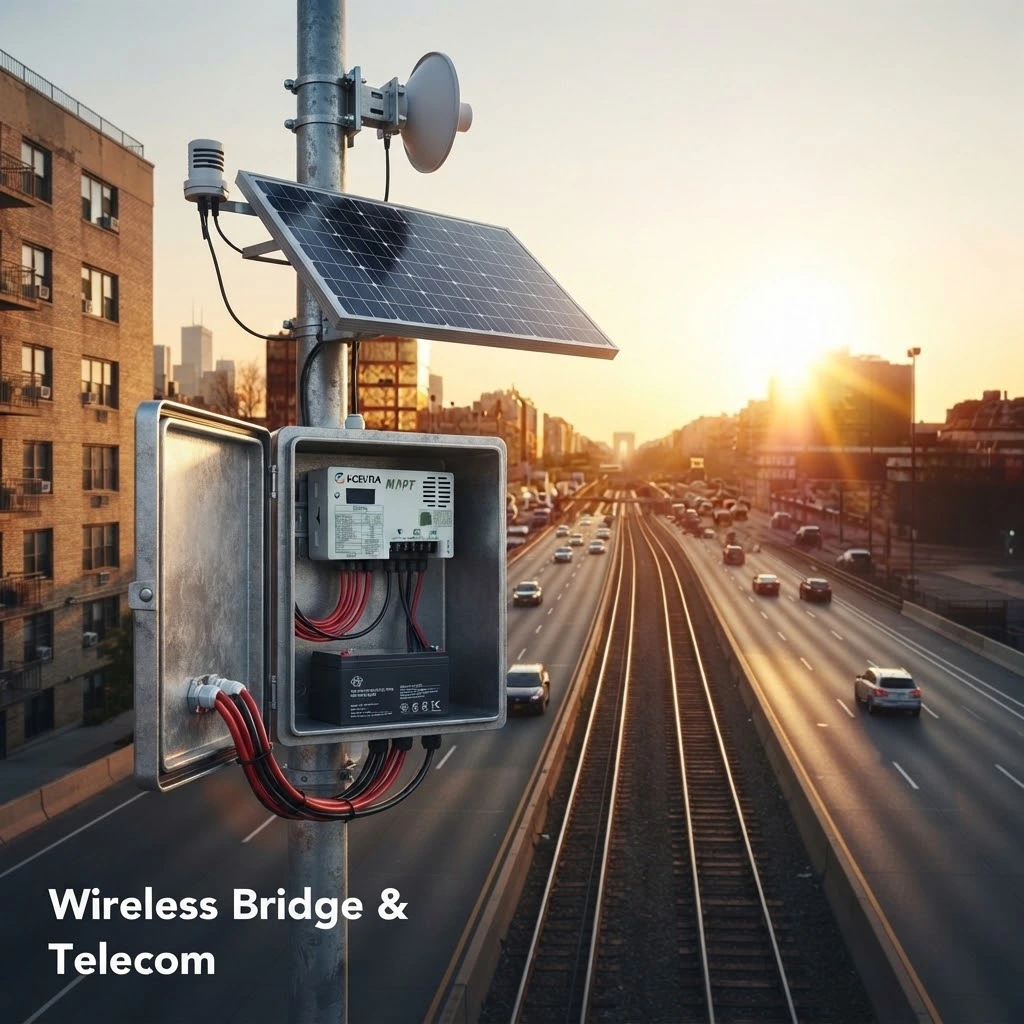
Wireless Bridge & Telecom
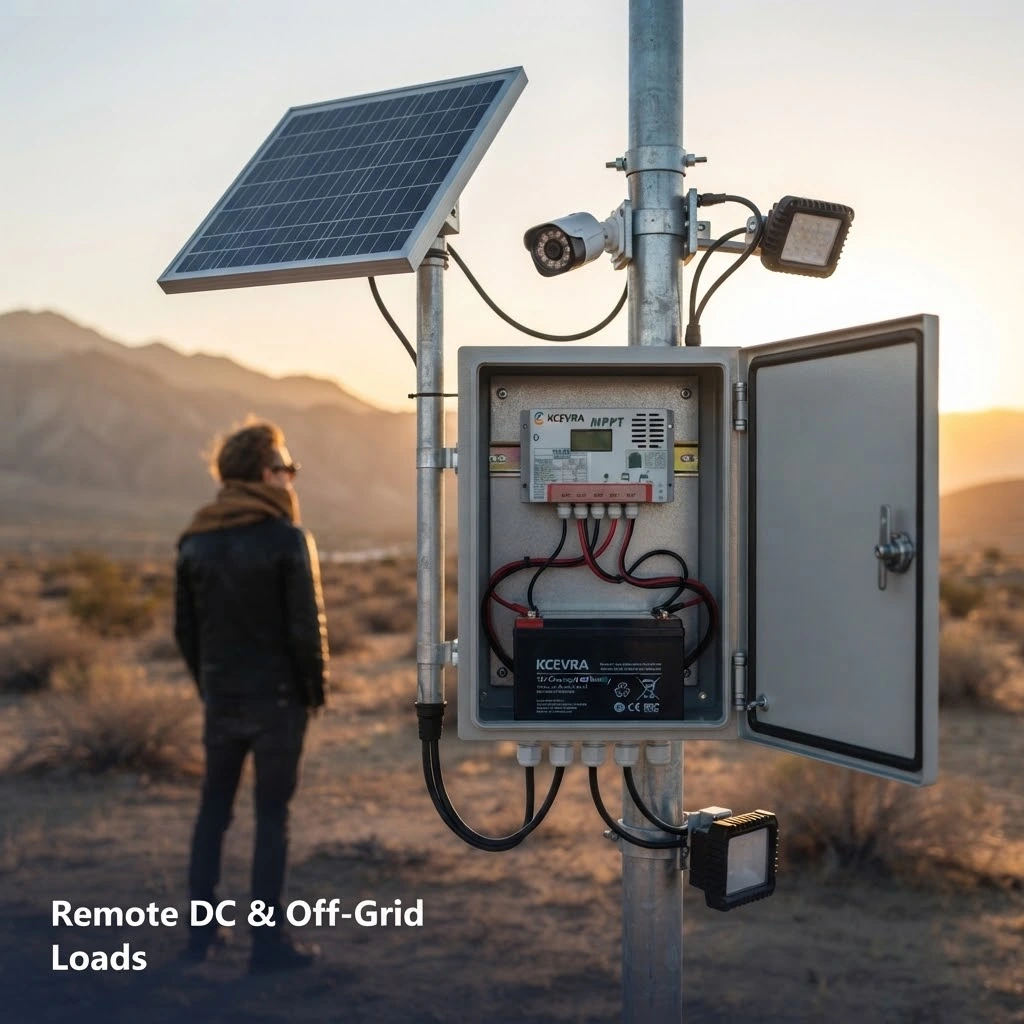
Remote DC & Off-Grid Loads
Solar CCTV System Coordination
Standard Architecture: solar panel → MPPT controller → battery → camera/PoE/network load.
Final controller selection depends on project-specific variables:
- • Number of cameras
- • Continuous and peak power
- • Night-time consumption
- • PoE standard
- • Local solar conditions
- • Required autonomy during cloudy days
- • Battery capacity
- • Mounting and enclosure conditions
Technical Documentation and Project Coordination
Technical documentation is available for model identification, electrical limits, battery platforms, communication options, installation conditions and system coordination. Where a project combines the controller with batteries, solar PoE equipment, mounting hardware or an integrated power enclosure, the selection discussion should keep the electrical and installation interfaces aligned.
Supplier Support Capabilities
- Model and configuration comparison
- Project parameter review
- Technical document support
- Solar CCTV and off-grid system coordination
- OEM/ODM requirement review subject to confirmation

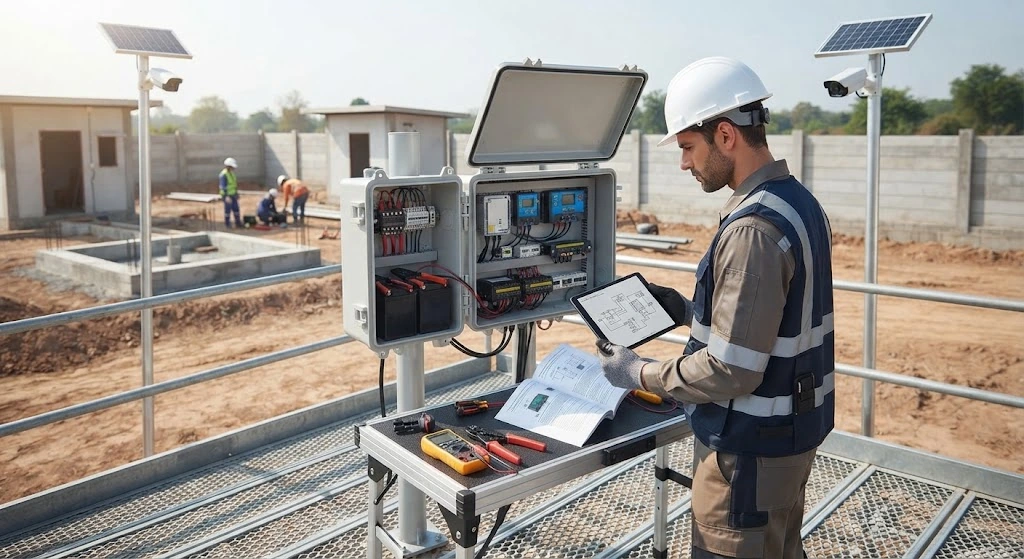
MPPT Controller Sizing & Selection Guide
Common technical requirements for specifying an off-grid solar charge controller.
How do I size an MPPT solar charge controller for my solar array?
What is the difference between M24HB, M24HC and M48HC?
Can an MPPT solar charge controller charge lithium or LiFePO4 batteries?
What communication options are available?
Can the controller be installed outdoors?
What information should I provide for an OEM/ODM or solar CCTV project?
Need help matching the controller to your PV array and battery bank?
Request Controller SelectionRequest a Quote & Project Configuration
Submit your system requirements to receive model-specific technical documentation and configuration support.